
Rooms
paying attention to our hearts

We all have that space in our homes — for some it’s merely a drawer; for others it’s a closet or a room; for others still it’s a whole basement — that we keep hidden from guests. (It can’t be just me, right??) It’s where all the clutter that we don’t know what to do with goes. Instead of caring for it, properly disposing of it right away, we tuck it away. We shove it into a dark corner thinking we’ll care for it later, and later rarely ever comes.
And we do this over and over again until the clean-up of that drawer or closet or basement becomes a completely overwhelming project that we tackle only if we absolutely have to (like if your daughter and her family ask to live in said basement). Otherwise, we just keep the door closed and go on about our lives.
Last month my church celebrated the baptisms of several people. Our practice is for each baptismal candidate to offer a brief testimony and reason for desiring baptism. From youngest to oldest, they share — sometimes with quivering voices and with trembling hands — but their bravery and earnest desire to follow Jesus gets me every time.
One particular young man articulately told his story of a life shaped by faith and following Jesus from a young age. For various reasons, he had put off the step of baptism as a child and youth and eventually felt like he just missed the boat. Perhaps a little embarrassed by his missed opportunities, he simply closed the door on that room in his heart and chose to ignore it —even serving on a pastoral staff at a different church in the region for a number of years.
And then he said something like this, “I began to realize there was a room in my heart I had closed off to God. He had every other part, and I thought that was enough. But God started knocking on that door.” Or at least his ears finally attuned to the tender knock, knock, knock.
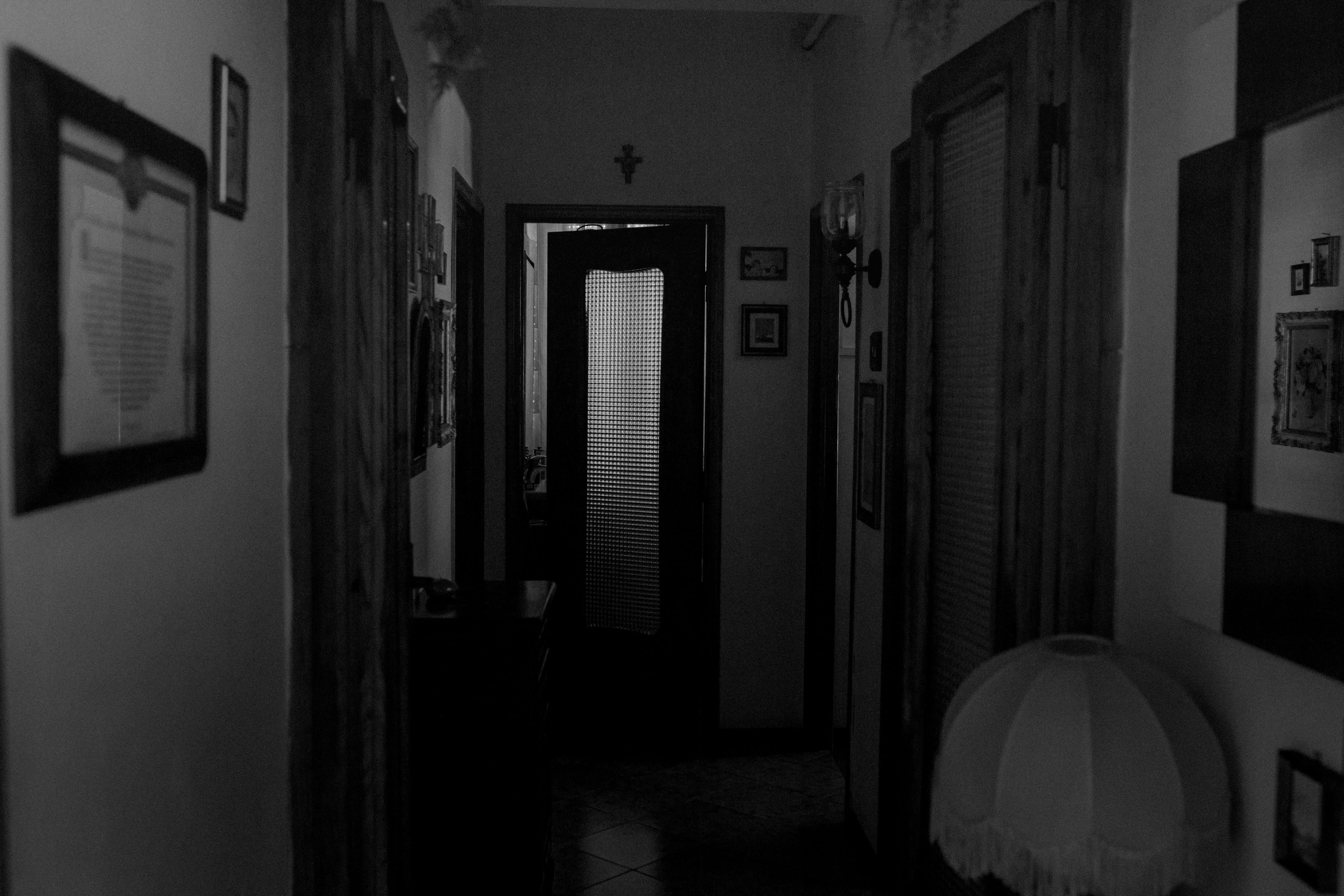
Giving our hearts to Jesus is not a once-and-done kind of thing.
This young man’s story struck me deeply — because I saw a bit of my own proneness to sealing off rooms in my own heart to God’s attention. And I sensed Jesus reminding me that I too can give my heart over to him, yet still refuse him access to certain rooms.
Over time these rooms become like that embarrassingly disorganized closet that houses a collection of random things I’ve shoved away to avoid others seeing my mess.
At first we tuck just a minor thing into the darkness, quickly and quietly so that maybe God won’t notice — a bitter beat of the heart, an unkind thought toward a person or people group, a self-righteous lift of the chin, a refusal to respond to God’s nudge to forgive or to take action. Instead of bringing these into the light of Jesus’s presence, we make a subtle decision to care for them on our own, to whisk them away out of sight until a better time or a future season.
And we slip the door closed to that room.
Eventually the room gets so full of mismanaged stuff that we fear opening the door to the avalanche that might fall out on top of us,
and we deny even Jesus access to that room.
While we carry on about our lives as if that room doesn’t exist, the Spirit in his gracious way doesn’t force entrance but waits patiently until we consent. But he knocks on these doors, patiently and tenderly . . . knock. knock. knock . . . until we respond.
In my work as a spiritual director and formational leadership coach, I talk a lot about approaching the spiritual disciplines and contemplative prayer practices as opportunities to create a hospitable place for the Holy Spirit to do his transforming work within us.
The disciplines and practices themselves aren’t the work; rather, they serve as the ongoing invitation for the Spirit to have his way in every room and closet and cabinet.
Incorporating a variety of patterns and practices in our lives can allow for regular cleanings and inventories that help us pay attention to God’s knocks on doors we didn’t realize (or maybe we actually do realize) are shut tight. Just as daily and weekly chores keep our physical spaces clean and uncluttered so can a commitment to regular rhythms of introspection and confession keep our hearts’ rooms uncluttered, ventilated, and full of Light.
*Practices like
Prayer — engaging in silence with God in addition to words we say to God
Meditation on Scripture — a deep and reflective reading of the text in addition to the more typical study approach
Spiritual direction — a safe space where we can expose the deeper places of our heart, a listening with another trusted and trained companion to the inner workings of the Holy Spirit in the living of our lives
Confession — a regular practice that allows God to search us and know us and, in turn, we respond to what is revealed with humble confession
“God, I invite your searching gaze into my heart. Examine me through and through; find out everything that may be hidden within me... See if there is any path of pain I’m walking on, and lead me back to your glorious, everlasting way—the path that brings me back to you.” (Psalm 139:23-24, TPT)
Generally speaking, I don’t want or intend to close off rooms in my heart to God. And I certainly don’t want to just talk to others about the rooms in their hearts without carefully and intentionally attending to the rooms in my own heart. But unless I properly care for the rooms of my heart in an ongoing way, it just happens.
My heart is God’s, but I must always be sweeping out the corners to keep all of its rooms uncluttered and open to his ongoing work.
Proverbs 4:23 is a beautiful reminder of this:
“Above all, guard the affections of your heart, for they affect all that you are. Pay attention to the welfare of your innermost being, for from there flows the wellspring of life” (TPT).
To that end, may we all endeavor to be faithful.
Until next time,
Kerry
*There are numbers of specific approaches to the practices listed here. (The Spiritual Disciplines Handbook by Adele Calhoun or Celebration of Discipline by Richard Foster are great resources to begin exploring some of these approaches if you’re interested in digging deeper.)